On Adaptation and Transformation
By: Ash Mayfair Instagram: Ash.Mayfair
FROM AWARD-WINNING WRITER AND DIRECTOR, NETPAC AND GOLDEN PEACOCK AWARD WINNER, INDEPENDENT SPIRIT AWARD NOMINEE, AND RECIPIENT OF MORE THAN TWENTY INTERNATIONAL AWARDS
THE OXFORD REVIEW PRESENTS ASH MAYFAIR
In recent weeks, the discourse around Christopher Nolan’s The Odyssey has prompted me to think a lot about the process of adaptation from text to screen.
I am sailing into the Charybdis myself, working on a very personal piece. Since 2019, I have been in the process of adapting my sister’s first novel, If I Had Two Lives, into a film. My sister, the author Abbigail Nguyen Rosewood, has transformed elements from our own childhood into the story. The main character is a young woman who grew up in Vietnam. In the book, we do not know her name. For ease of narrative, I will call her Yen.
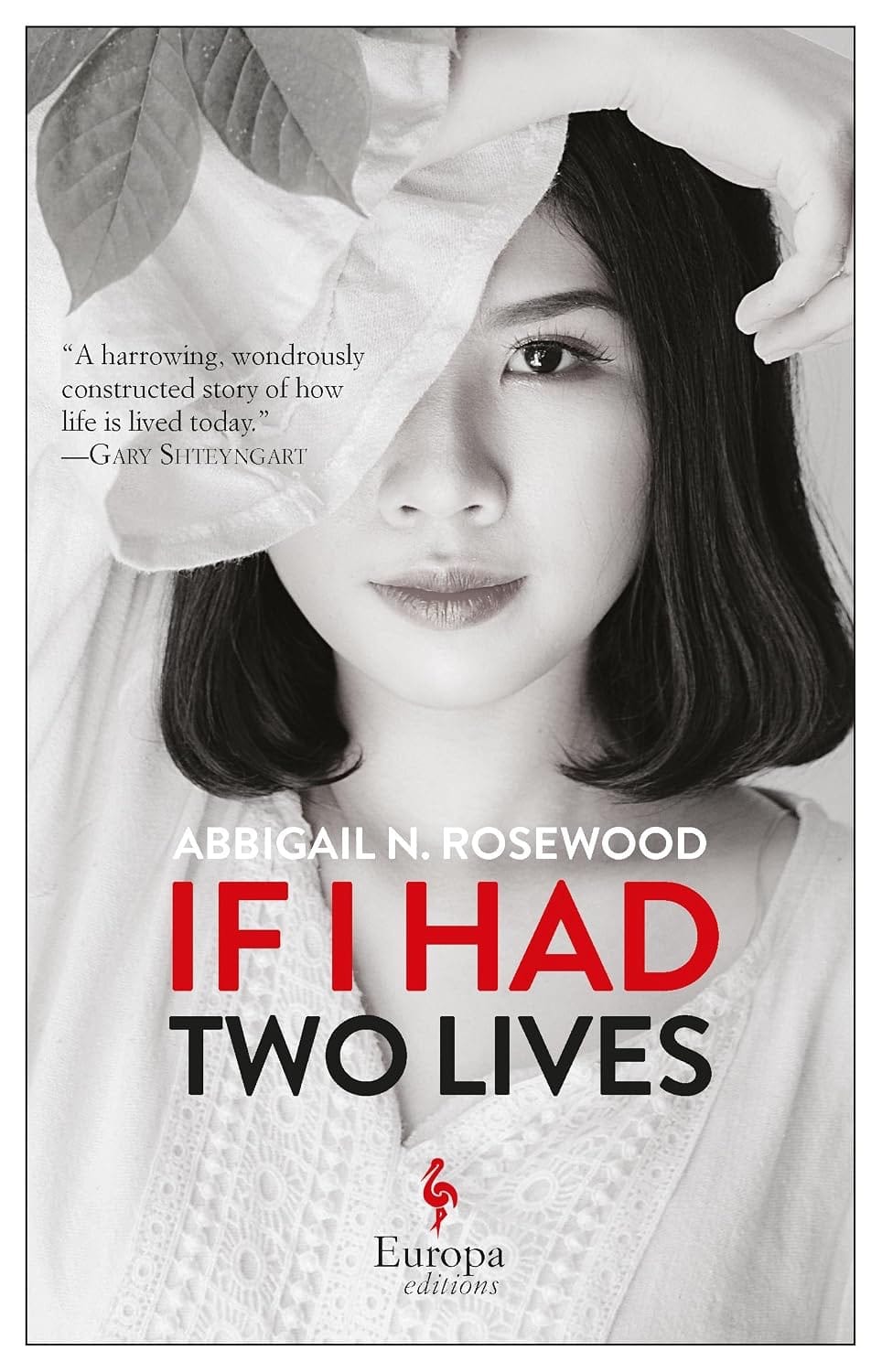
When we meet her, Yen is living alone in New York. She falls in love with a married woman and eventually decides to be the surrogate mother for the couple’s child. As Yen experiences the transformative power of her pregnancy and motherhood, she feels compelled to investigate the mystery of her childhood and the reason why her own mother abandoned her as a child. The novel itself is a loose adaptation of real-life events that affected my sister and me. Many characters in the book and now my screenplay are lifted from people we know intimately in our family.
When we adapt a narrative into another medium, the fear, and often the criticism, is that something is inevitably lost. Countless reviews of Nolan’s film revert to the Homeric epic and the multiple different published translations as the authoritative versions of the story. Watching The Odyssey, I realized that filmmakers are often held to a very different standard when it comes to adaptation. Nolan’s screenplay is brilliant. I love that he takes liberties with Homer’s storytelling, imprinting his own fingerprint, allowing the poetry of images to frequently overcome, and at points, drown the text. I can already hear the clamor of readers and authors arming themselves to defend the written words here. But bear with me.
This summer, I spent two weeks in Rome learning to create a portrait sculpture from a live model at David Simon’s studio. For nine hours a day, five days a week, I molded clay in a sweaty studio in the heart of the Regola neighborhood. Some of those days, we lost electricity and continued to work with just sunlight filtering through the shuttered windows. Our model, Sora, was an incredible picture of serenity despite the sweltering heat. We often persisted until darkness found us. I learned that the experience of sculpting was not unlike the process of filmmaking. Capturing an expression from a live model into clay is very close to what I have tried to do with film my entire career, trying to find precious moments of emotional depth and recording them for the screen. However, the difference in expectation is vast when adaptations are taken by writer-directors compared to visual artists.
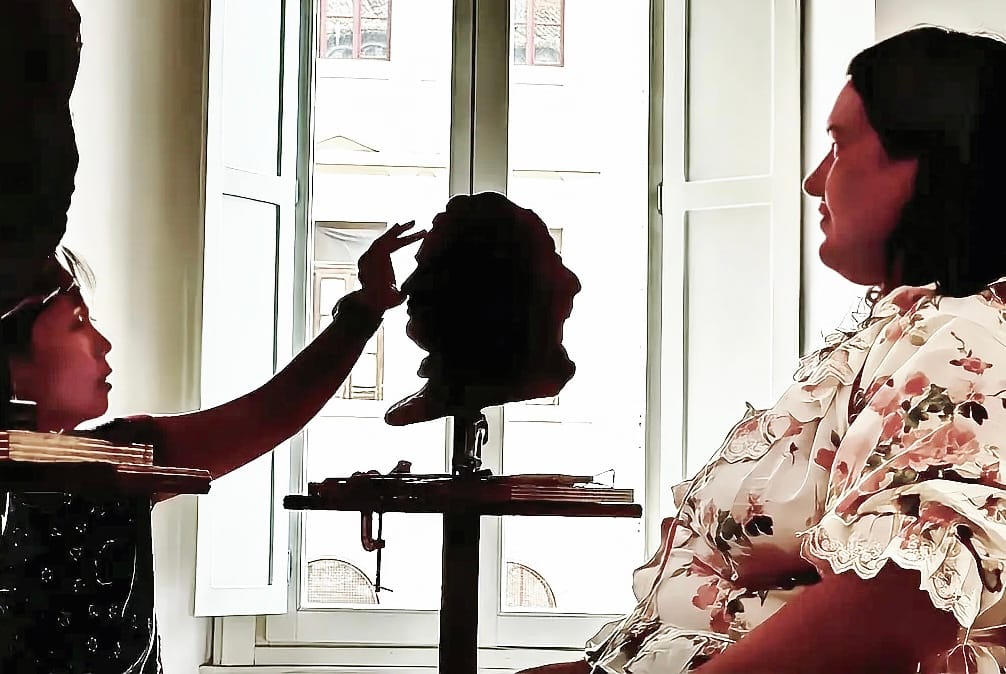
In sculpture and painting, an accurate likeness of the subject is only the beginning. Artists are expected to have a signature in the process. Bernini’s sculpture of Cardinal Borghese is so distinct from that of Finelli, even though both portraits are of the same person. Both are masterpieces. Yet Bernini’s sculpture moves me so much more because of its playfulness and lightness of touch, even in marble. After two weeks of labor and countless espressos, my fellow classmates and I presented five completely different portraits of Sora. It was clear that each of us had interpreted Sora’s magnetic smile in our own way. When I looked around the class, there was no mistaking which portrait belonged to which sculptor. Seeing all the sculptures on display through Sora’s eyes was also a revealing experience for me. It was impossible for us to have made the artwork without our own creative DNA, whether it pleases the beholder or not.
I often wonder what it is that this creative DNA encompasses. Homer’s poem was already an adaptation of centuries of heroic accounts and folklore. Nolan’s choice of hero is firmly woven into this tradition. But no other director would have made the same film. I know that no other filmmaker would create the same sequence of images as I do, even if I were to give them my own script. Jon Batiste talks about how much of the music he writes is ‘“inevitable’”. I wonder how much of this inevitability can be attributed to the Divine and how much of it flows directly in our very human and fragile veins.
When I write the screenplay for If I Had Two Lives, I have two sets of stories to consider, the one in the novel and the one that happened in my childhood. As a filmmaker, I must pledge my loyalty, not to history nor to the book, but to the film itself. There is a particularly cruel character in the novel, and in real life, that I have written with added layers of sympathy in the screenplay. The ending of my film also departs from my sister’s novel. And both of our creations are different from the events of our lives. I know that once this film goes into production, the words of the script itself will be transformed yet again into images whose power I cannot always predict or control. This is where the magic of adaptation and filmmaking really shines for me.
The act of adaptation leads to ineluctable transformation. If I am very lucky, perhaps some of my work will last long enough for other artists to adapt and reinvent. In the meantime, I shall continue to work in small studios with shuttered windows, with or without natural light, a pleasure and a privilege I do not take for granted.